Craving restaurant-style dosas? Master this crisp South Indian dosa recipe with a foolproof, fermented batter guide. Perfect results every single time!
Introduction
Nothing beats the comfort of a golden, paper-thin, crispy South Indian dosa served fresh off the griddle. It is the undisputed king of South Indian breakfast cuisine, loved across the globe for its incredible texture and tangy, fermented flavor. However, achieving that perfect, restaurant-style crunch at home can feel like a daunting task.
Have you ever ended up with a sticky, soggy, or overly thick crepe instead of a beautifully lacey, crisp dosa? You are not alone. The secret doesn’t just lie in how you spread the batter—it lies entirely in the science of the batter itself.
In this comprehensive guide, we will break down the traditional perfect dosa recipe, from soaking the grains to fermenting the batter and mastering the tawa technique. Say goodbye to soggy failures and hello to breakfast perfection!
The Secret to Perfect Dosa Batter (Ingredients)
To make an authentic dosa, you only need a handful of pantry staples. However, the exact ratios are critical.
- Idli Rice / Parboiled Rice (3 cups): Provides the necessary body and structure.
- Raw Rice (1 cup): Helps in achieving that signature golden crunch.
- Whole White Urad Dal / Black Gram (1 cup): Gives the batter its fluffiness and acts as the binding agent.
- Fenugreek Seeds / Methi (1 teaspoon): The secret ingredient! Methi aids fermentation and gives the dosa a beautiful golden color.
- Poha / Flattened Rice (1/2 cup): Keeps the inside of the dosa soft while keeping the exterior crisp.
- Water: For soaking and grinding.
- Rock Salt: To taste (add after fermentation in cold climates, or before in warmer weather).
Step-by-Step Instructions:Crispy Homemade South Indian Masala Dosa
1. Soaking the Grains
Thoroughly wash the idli rice and raw rice together in a large bowl until the water runs clear. In a separate bowl, wash the urad dal and fenugreek seeds. Soak both bowls in ample water for at least 4 to 6 hours. In the last 30 minutes of soaking, rinse the poha and add it to the soaking rice.
2. Grinding to Perfection
Drain the water from the urad dal, reserving a little bit of the chilled soaking water to use during grinding. Grind the urad dal and methi seeds first in a high-speed blender or wet grinder. Add water in small splashes until the dal turns into a smooth, fluffy, and airy paste. Transfer this to a large mixing container.
Next, grind the rice and poha mixture. This should be ground to a smooth consistency, but a microscopic graininess (like fine semolina) is completely fine. Pour the rice batter into the same container as the urad dal batter.
3. The Fermentation Process
Add rock salt to the mixture and use your clean hands to mix the two batters thoroughly for 2 to 3 minutes. The warmth from your hands naturally introduces healthy wild yeasts that kickstart the fermentation.
Cover the container with a loose lid and leave it in a warm, dark place for 8 to 12 hours. If you live in a cold climate, place the batter inside an oven with the oven light turned on. Once fermented, the batter should double in volume, look frothy, and carry a pleasant, slightly sour aroma.
4. Pouring and Cooking the Dosa
Gently stir the fermented batter. Heat a heavy cast-iron or non-stick tawa (griddle) over medium-high heat.
Pro Tip: To test the heat, sprinkle a few drops of water on the tawa. It should sizzle and evaporate instantly. Wipe the tawa clean with a damp cloth or half an onion dipped in oil.
Pour a ladleful of batter right into the center of the hot tawa. Using the back of the ladle, quickly but gently spread the batter in a continuous outward spiral motion to form a thin circle.
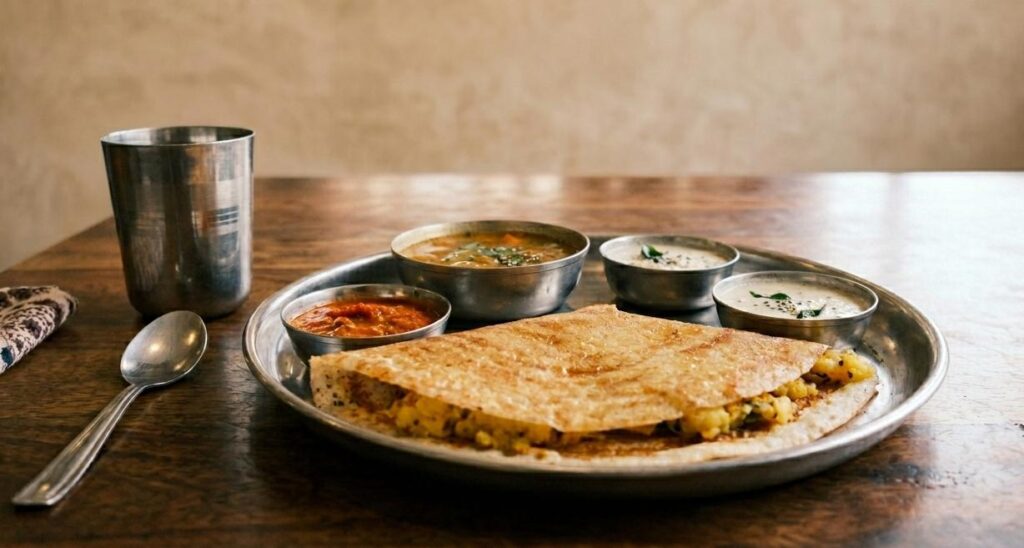
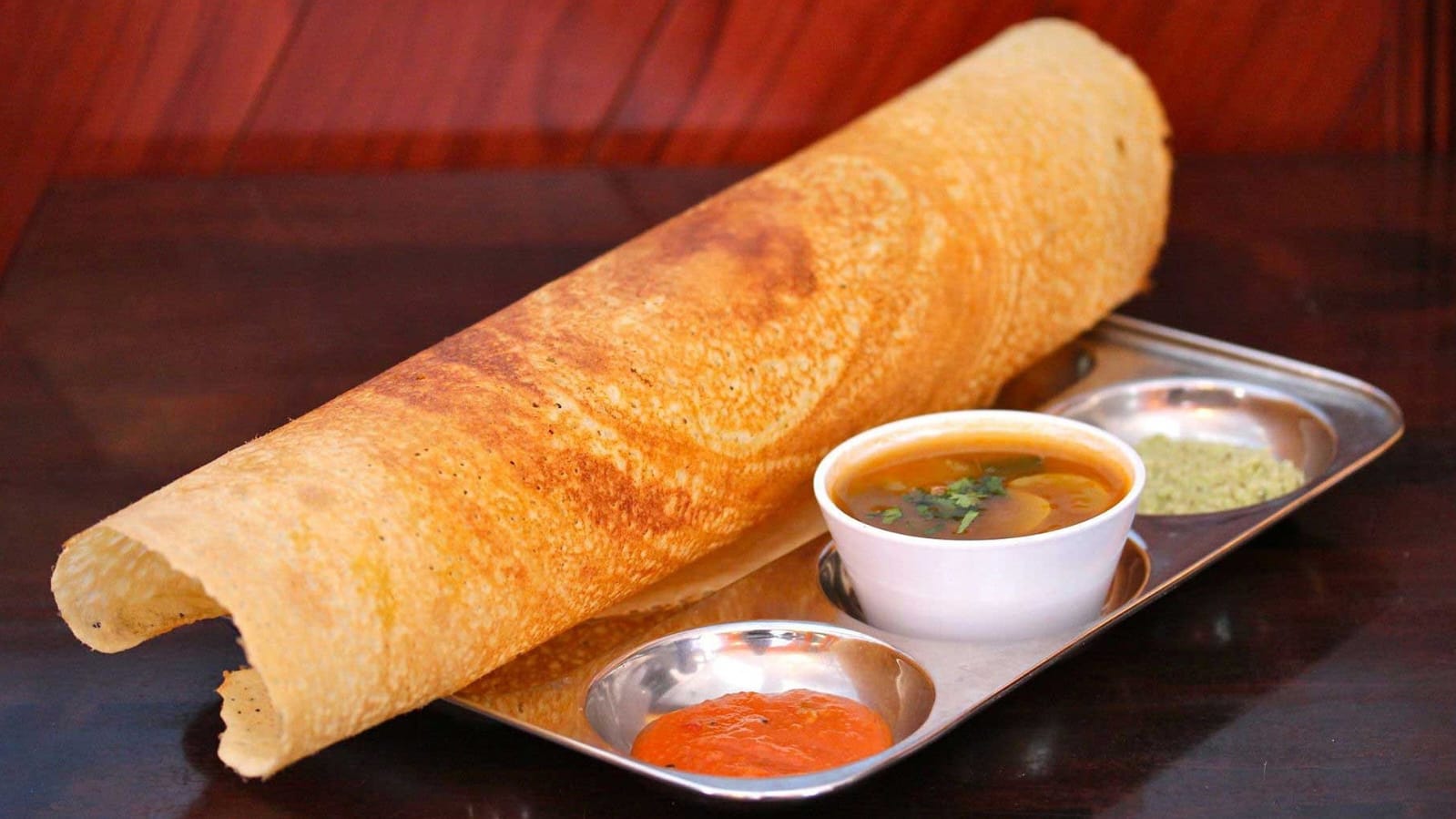
Drizzle a teaspoon of ghee or oil around the edges and over the center. Cook on medium heat until the base turns a rich, golden brown and the edges start lifting up naturally. If you want to make a masala dosa recipe, this is the moment to place a scoop of spiced potato masala right in the center. Fold the dosa in half or roll it into a cylinder and lift it off the pan.
Crucial Mistakes to Avoid (Why is my Dosa Soggy?)
- Incorrect Rice to Dal Ratio: Too much dal will make the dosa soft and spongy (like an idli), while too much rice will make it hard and difficult to spread. Stick to the 4:1 total rice-to-dal ratio.
- The Tawa Temperature: If the pan is too hot, the batter will stick to the ladle and clump up while spreading. If it is too cold, the dosa will absorb oil and become soggy. Always wipe down the pan with water between dosas to regulate the temperature.
- Over-fermentation: If the batter gets too sour, it won’t crisp up nicely and will break easily on the griddle.
Serving Suggestions
Serve your hot, crispy south indian dosa immediately alongside a bowl of steaming flavorful sambar, classic creamy coconut chutney, and a fiery tomato-onion chutney. Pair it with a frothy cup of South Indian filter coffee for the ultimate authentic breakfast experience!